Why Kids Learn Empathy Faster Through Games Than Lectures, The Role of Yozgoo
Two students sit through the same lesson on kindness Monday morning. Both know bullying is wrong.
By Friday, a classmate is being mocked with a hurtful nickname. One student recognizes it as bullying and speaks up. The other laughs along because "it's just a joke."
That gap matters. According to NCES, nearly 1 in 5 students report being bullied at school.
The issue for schools is to teach kids how to recognise bullying and respond when it occurs or is witnessed.
Why Games Often Leave a Bigger Impact Than Lectures
Most students can define empathy. The harder part is using it in a real situation.
A lecture can explain how bullying affects someone. A game places students inside a situation where they must think, decide, and respond. That difference matters.
Students are more likely to remember experiences than instructions. When learning feels personal, lessons move beyond the classroom and become easier to apply in everyday life.
Seeing the Situation Through Another Student's Eyes
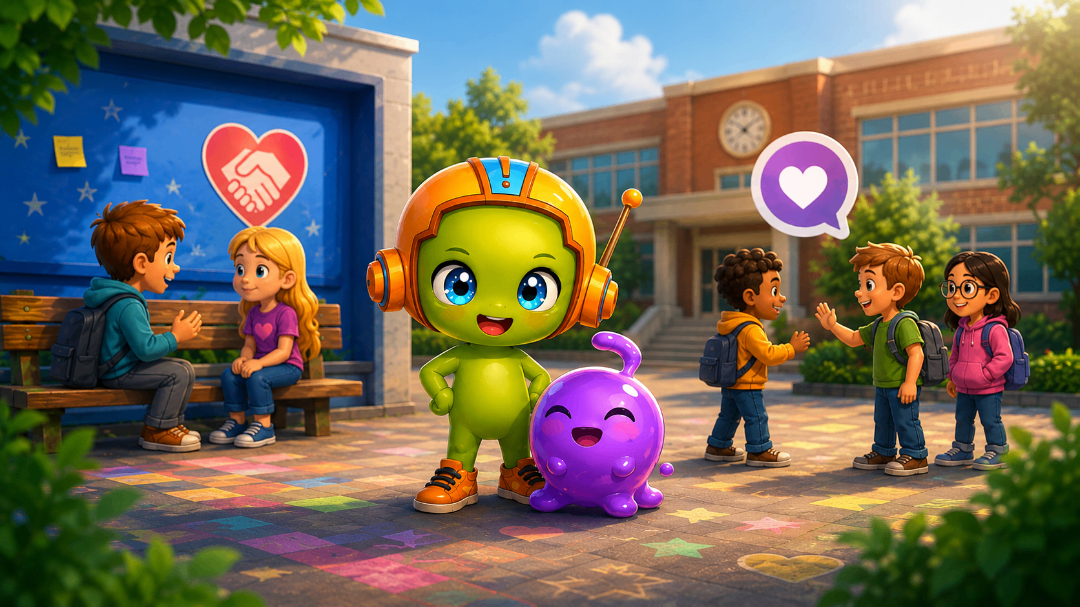
Most anti-bullying content puts a kid in the audience, watching something happen to somebody else on a screen. Yozgoo puts them inside it instead.
The player isn't watching someone getting called names or shut out on purpose, they will be that kid, deciding in real time how to handle it.
Researchers studying video games and perspective-taking have found that controlling a character and becoming its brain is what actually builds empathy.
That shift, from watching to being, is the design behind character education that actually sticks.
Inside a Yoz and Fizbee Scenario
Picture the group chat scene. A classmate named Theo gets added to a project group, then someone starts calling him names in the thread, and it doesn't stop when he asks them to.
By morning, the group gets quietly moved without him, no explanation, just gone. The player has to decide what to do next: call it out, stay quiet, or pile on.
There's no music cue telling them which choice is right. They just have to sit with it, the same way a kid actually would between third and fourth period, and choose. None of this is a hunch. Yozgoo came out of a partnership with Clemson University's Institute on Family and Neighborhood Life, and it's been tested on real students: a study of 120 kids, ages 10 to 12, split evenly between those who played and those who didn't. The group that played showed measurable gains in bullying knowledge, attitude, and self-efficacy, exactly the kind of bullying prevention curriculum outcomes a district has to be able to defend to a board. Yozgoo isn't trying to replace what a school already runs. Most districts have some form of SEL curriculum in place, Second Step, Positive Action, a homegrown character program, and Yozgoo isn't asking anyone to rip that out. It's the piece that turns the language those programs teach into something a kid actually has to use. An anti-bullying curriculum works better when at least one part of it makes a student practice the skill instead of just naming it. A few weeks later after playing Yozgoo, a kid sees a classmate getting picked on and chooses to say something. He isn't remembering a lesson or replaying the game in his head. He's reacting. The difference is that he's already practiced that decision once before in a safe place, before it mattered in real life. Students don't need more opportunities to memorize the definition of empathy. They need opportunities to practice. Yozgoo combines research-backed learning with interactive gameplay to support empathy in schools, strengthen character education, and complement existing bullying prevention efforts. Play a demo and see how students can learn by doing, not just listening.What Clemson Research Revealed About Game-Based Learning
Where Yozgoo Fits Alongside Your SEL Curriculum
How Small In-Game Decisions Can Shape Real-World Behavior
Ready to Show Your Students What This Feels Like?