
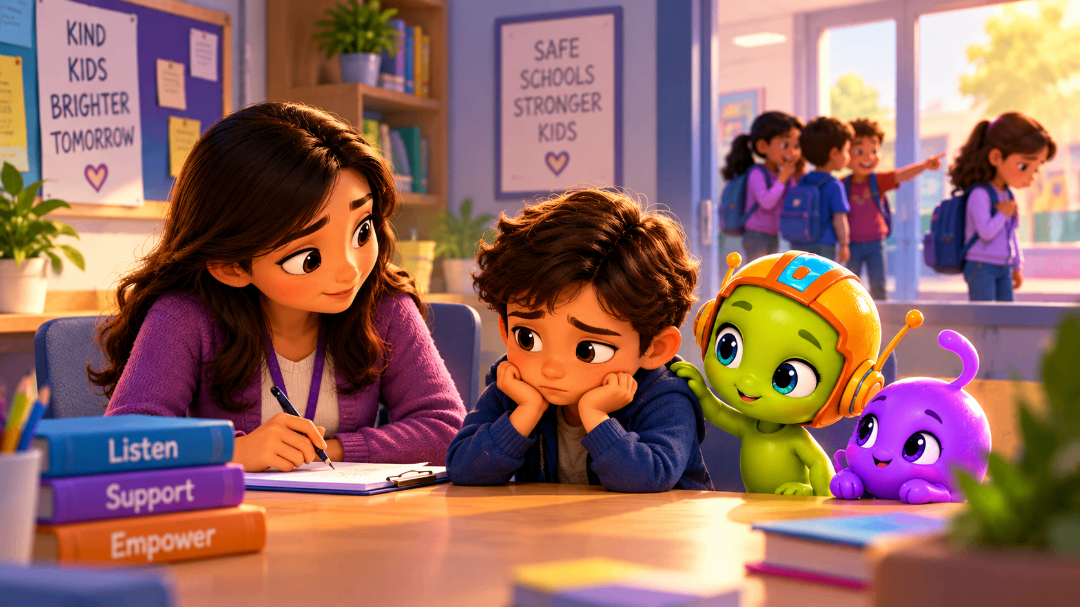
Every school counselor knows the loud cases: the shoving, the name-calling, the playground fight. The harder cases are the children who say nothing at all. With bullying in 3rd grade, silence is often the biggest red flag. Eight- and nine-year-olds are learning that telling an adult can feel risky, so many hide what is happening to them. Knowing the signs of bullying in elementary school helps a school counselor step in before a quiet problem becomes lasting harm. This guide explains why third grade matters, what silent victims look like, the warning signs a child is being bullied, and practical ways to identify and support them. You do not need special equipment, only sharper observation and a few simple, reliable weekly habits.
Why Grade 3 Is a Turning Point for Hidden Bullying
Around age eight, friendships become more selective and social rank starts to matter. Children notice who is included and who is not, and exclusion becomes a tool. Three things make this age unique:
Social awareness grows faster than emotional vocabulary, so kids feel hurt but cannot explain it.
Peer approval starts to matter more than adult approval, which makes telling a teacher feel risky.
Bullying shifts from obvious physical acts to quieter forms like exclusion and rumors.
That gap is where hidden bullying grows.
Who Are "Silent Victims"? Understanding the Child Who Doesn't Tell
A silent victim is a child who is being targeted but never reports it. Common reasons include:
Fear of retaliation from the child or group involved
Shame or worry about being seen as weak
Belief that nobody will help
Not realizing that what is happening counts as bullying
These children are often quiet, anxious, or new to the class, which makes them easy to overlook. Watch the child who always says "I'm fine." Because they rarely disrupt anything, their distress can go unnoticed for months.
8 Quiet Warning Signs a Child Is Being Bullied
Watch for patterns, not single moments. These eight signs often appear together:
Physical complaints: stomachaches or headaches before school, or frequent nurse visits
School avoidance: sudden reluctance to attend or begging to stay home
Missing belongings: lost, damaged, or "forgotten" items or lunch money
Social isolation: sitting alone at lunch or recess, or no longer mentioning friends
Academic drop: sharp decline in participation, effort, or grades
Emotional changes: mood swings, tearfulness, irritability, or clinginess
Sleep and appetite shifts: nightmares, trouble sleeping, or skipped meals
Avoidance of places: steering clear of certain hallways, buses, or classmates
One sign alone may mean little. Several signs that persist deserve a closer look.
Where Bullying Hides in Elementary Schools
Bullying rarely happens in front of teachers. Check these common blind spots:
Bus lines and school buses
Restrooms and locker areas
Cafeteria corners and lunch lines
Unsupervised stretches of the playground
Hallways during transitions
Shared devices and messaging apps, since digital unkindness can start earlier than adults expect
Ask teachers, bus drivers, and lunch staff where they feel least able to see students.
How to Identify Bullying Victims: Practical Tools for School Counselors
Effective school counselor bullying prevention relies on several sources, not one. Build a simple toolkit:
Classroom check-ins: short, private "thumbs up, sideways, down" moments
Anonymous surveys: drawing or feelings activities that let kids share safely
Staff observations: quick notes from teachers, lunch aides, and bus drivers
Data patterns: attendance dips, nurse visits, and repeated office referrals
Peer mapping: notice who eats alone or is rarely picked for groups
Compare notes weekly and record what you see with dates so patterns become visible. The StopBullying.gov warning signs guidance is a helpful shared reference for your team.
Starting the Conversation: What to Say (and What Not to Say)
Choose a private, low-pressure moment, such as while drawing together.
What to say:
"I've noticed you seem sad lately. I'm here to listen."
"You're not in trouble, and this is not your fault."
"Thank you for telling me. Let's work out next steps together."
What not to say:
"Who is bullying you?" (it feels like an interrogation)
"Just ignore them" or "fight back" (it dismisses the problem)
"I promise I won't tell anyone" (you may need to involve others)
Do not push for details. Explain what happens next and follow up within a few days.
Helping Kids Speak Up: A Game-Based Bullying Prevention Program for Elementary Schools
Children speak up more easily when they have practiced. Yozgoo is a research-backed, game-based bullying prevention program for grades 2 to 6, developed with Clemson University and game studio Gamify. With Yozgoo, counselors can:
Give students a safe space to rehearse responses to physical, verbal, exclusion, and cyberbullying scenarios
Build a shared language for talking about bullying
Support classroom discussions with characters kids relate to, like Yoz and Fizbee
Reinforce the message: Play. Practice. Prevent.
Visit the Yozgoo platform to explore the program for your school.